UK State Pension
What is the UK State Pension?
The State Pension is a regular payment by the government to qualifying citizens once they reach the State Pension age (68 at the time of writing).
How much do you get?
How much you get depends on how many qualifying years of National Insurance contributions (NICs) you have. You must pay a minimum amount of National Insurance each financial year for that year to be counted as a qualifying year.
For the 2026/27 year, the full State Pension is £241.30 per week.
How much you get as pension will depend on your qualifying years as follows:
- 35 qualifying years: 35/35 x £241.30 = £241.30 a week (full amount)
- 30 years: 30/35 x £241.30 = £206.82 a week
- 10 years: 10/35 x £241.30 = £68.24 a week
When do you get it?
At the time of writing (2023), it’s 68 but this is probably going to change. You can use this tool to get the latest State Pension age.
How do you check how many qualifying years you have?
You can use your gov.uk account which should tell your National Insurance record like so:
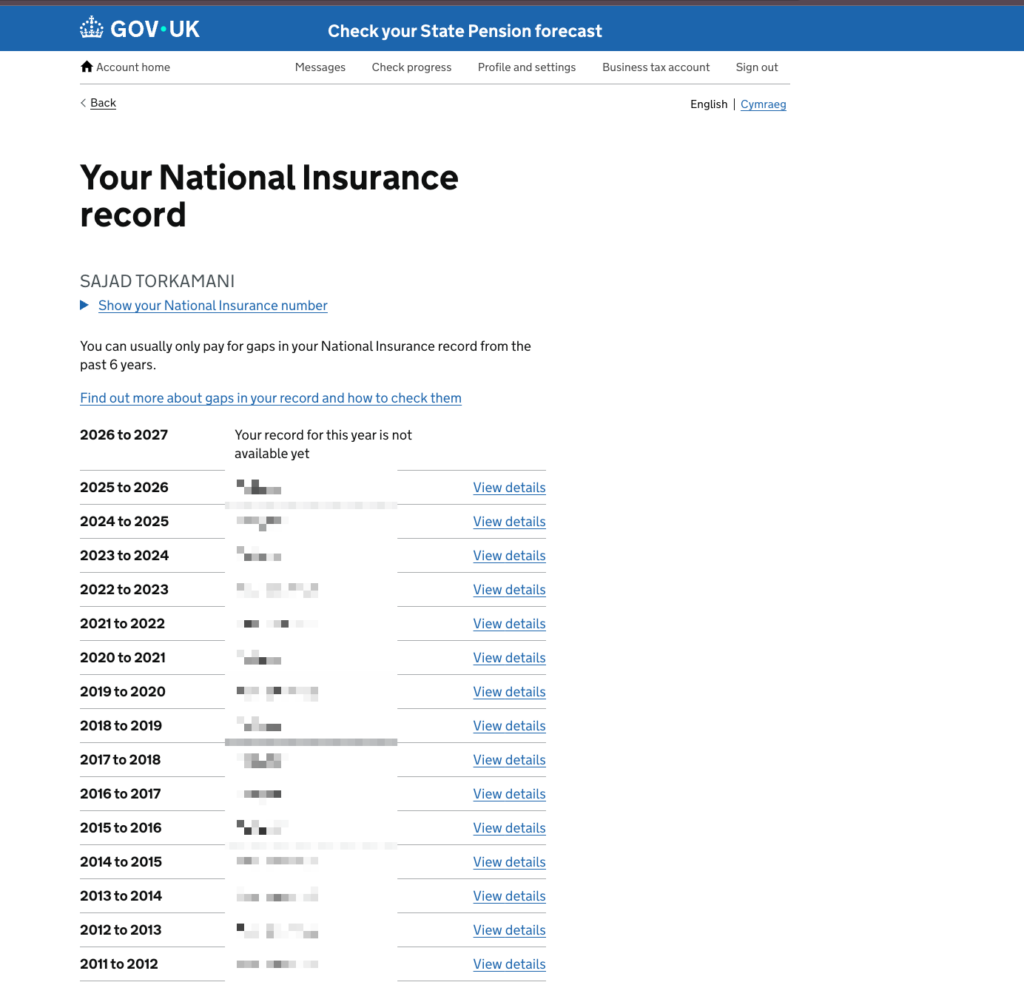
What qualifies as a full year?
A given tax year counts as a “full year” if at least one of the following criteria is met:
- You earn at least the Low Earnings Limit (LEL) through employment during the tax year. At the time of writing (2025/26), the LEL is £123 per week.
- You pay enough National Insurance through self-employment
- How much?
- You receive National Insurance credits via benefits, caring responsibilities or child benefit.
Other notes
- Beyond a certain threshold, higher contributions towards your pension don’t mean you’ll get more back.
Sources
Mentions (2)
Posts this one links to.